
In the high-stakes hunts of the Expanse, novice hunters often fall into the trap of focusing on a machine’s core health pool, treating it as a monolithic damage sponge. This approach is a tactical fallacy, a crude application of force that ignores the intricate mechanical nature of the prey. The true measure of a hunter’s skill—and the defining factor in a successful, resource-efficient hunt—is the mastery of Pinpoint Targeting. This discipline, the systematic deconstruction of an ARC machine’s offensive and locomotive capabilities by targeting specific limbs and subsystems, is not merely an advanced technique; it is the fundamental strategic imperative for survival and dominance.
This analysis will deconstruct the principles of component-based takedowns, illustrating how a precise understanding of machine anatomy and weapon weak points separates a clean, controlled hunt from a chaotic scramble for survival against a fully operational behemoth.
The Principle of Threat De-escalation
Every ARC machine is a collection of interconnected threat vectors, each with its own tactical priority. A Stalker’s tail-mounted plasma cannon, a Ravager’s railgun, and a Titan’s seismic leg stomps are all individual systems that can, and must, be neutralized independently. Threat De-escalation is the cognitive process of identifying the most immediate danger a machine presents and surgically removing it from the equation. Firing indiscriminately at the chassis is an exercise in futility when a single well-placed shock arrow can disable the primary weapon system in seconds, fundamentally altering the battle calculus.
The goal is to transform the battlefield from a reactive state (dodging an unpredictable barrage of attacks) to a proactive one (dictating the terms of engagement against a crippled opponent). A disarmed machine is a predictable one, allowing the hunter to control spacing, manage resources, and set up for the next phase of the assault without constant, overwhelming pressure.
Anatomical Targeting vs. Core Damage: A Tactical Dichotomy
The distinction between damaging a component and damaging the core is critical, representing two opposing philosophies of engagement. While both contribute to the machine’s eventual destruction, their strategic value is vastly different and must be understood.
- Anatomical Targeting: This approach focuses on causing a functional debility. Destroying a leg joint on a Charger will not only inflict damage but also cripple its mobility, preventing its devastating charge attack. Tearing off a Ravager’s cannon removes its primary ranged threat entirely. This is a strategy of functional defeat, where the machine is rendered combat-ineffective long before its health pool is depleted.
- Core Damage: This is the brute-force method of simply reducing the machine’s overall hit points to zero. While ultimately necessary, prioritizing it too early leaves all of the machine’s weapon systems intact. This prolongs the most dangerous phase of the fight, forcing the hunter to expend more resources (ammunition, healing potions) dodging attacks that could have been prevented.
Elite hunters understand this hierarchy: neutralize primary threats via anatomical targeting first, then exploit the resulting vulnerability to efficiently attack the core. This sequential approach minimizes risk and maximizes damage uptime, turning a dangerous fight into a controlled disassembly.
The Component Damage Matrix: A Hunter’s Guide
To effectively apply these principles, a hunter must internalize the “damage matrix” for priority targets. This involves recognizing the component, its associated threat, and the optimal elemental weakness to exploit for its removal. An abbreviated matrix for a common mid-tier threat, the “Ravager,” illustrates this concept:
| Component | Associated Threat | Primary Weakness | Strategic Outcome |
|---|---|---|---|
| Back-Mounted Railgun | High-velocity, long-range energy projectile. Highest priority threat. | Tear / Detachment | Completely neutralizes ranged capability. Weapon can be recovered for heavy ammo. |
| Hip-Mounted Power Cells | Powers all weapon systems; vulnerable to chain reaction. | Shock / Overload | Causes a large AoE blast, stunning the machine and damaging nearby components. |
| Leg Actuators | High-speed lunges and evasive maneuvers. | Frost / Brittle | Severely reduces mobility, preventing rapid repositioning and making it an easy target. |
Resource Harvesting and Component Integrity
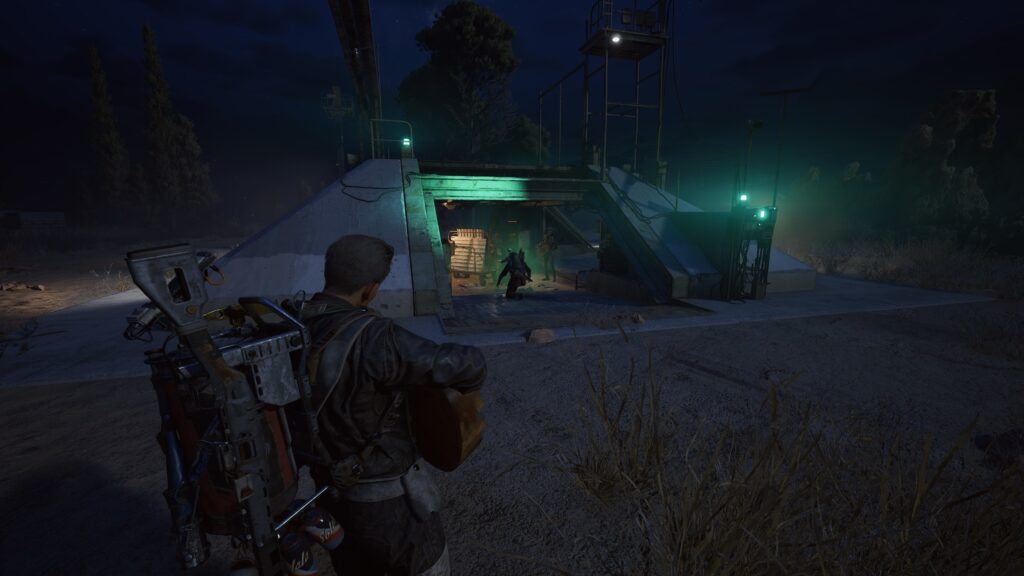
Beyond immediate tactical advantage, pinpoint targeting is intrinsically linked to the meta-game of resource management. Many of the most valuable machine components—the very materials needed for crafting high-tier ammunition and gear—are destroyed if the machine is defeated through unfocused, explosive core damage. A Stalker’s stealth generator, for example, is a priceless crafting resource that can only be harvested if it is surgically detached before the machine is destroyed.
Therefore, a hunter’s targeting priority must be a calculated balance between immediate threat removal and long-term resource gain. This is the advanced meta-game: disabling a weapon with a tear-focused arrow to preserve its salvageable parts, rather than shattering it with a high-explosive blast. A successful hunt is not just one you survive, but one that leaves you better equipped for the next.
Psychological Warfare: Inducing State Changes
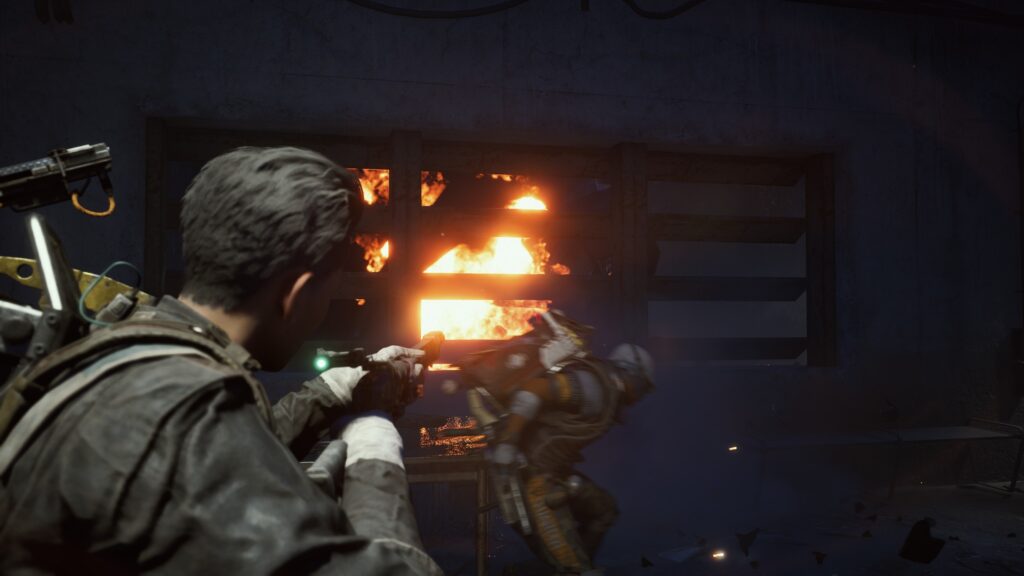
Advanced hunters recognize that component destruction is not just physical, but psychological. Stripping a machine of its primary functions can induce specific Behavioral State Changes. A disarmed Thunderjaw, for instance, may abandon its ranged bombardment protocol and revert to more predictable, albeit aggressive, melee attacks like charges and tail swipes. By knowing which components trigger which behavioral shifts, a hunter can manipulate the AI, forcing it into a state that plays to the hunter’s strengths. This is the ultimate form of control: turning the machine’s own programming against it.
Conclusion: The Hunter as a Surgeon
In the unforgiving world of machine hunting, raw damage output is a crude and inefficient tool. It is the scalpel, not the sledgehammer, that defines mastery. Pinpoint Targeting, executed through a deep understanding of machine anatomy, damage types, and strategic threat de-escalation, transforms a hunter from mere survivor into a dominant predator. By systematically dismantling their mechanical prey limb by limb, elite hunters control the flow of combat, manipulate machine AI, maximize their resource acquisition, and turn the most fearsome ARC machines into a series of solvable mechanical puzzles. This is the strategic imperative that underpins every legendary hunt.