
In the unforgiving crucible of squad-based operations, individual skill is a baseline expectation, not a guarantee of victory. The decisive factor that separates elite fireteams from disorganized rabble is the mastery of Gadget Synergy. This is the advanced discipline of selecting and deploying equipment not as individual tools, but as interconnected components of a single, cohesive tactical machine. A loadout is not a mere collection of a squad’s favorite items; it is a carefully architected system where the effectiveness of each gadget is exponentially amplified by the presence of the others.
This analysis will deconstruct the fundamental principles of synergistic loadout design, moving beyond the simplistic “rock-paper-scissors” model to a more fluid and potent understanding of squad-level tactical supremacy. We will explore how complementary and combinatorial gadget effects create battlefield control that is far greater than the sum of its parts.
The Principle of Effect Priming and Detonation
The most fundamental concept in gadget synergy is the “primer/detonator” relationship. This involves one gadget applying a status effect or environmental condition (the primer) that another gadget can exploit for a devastating outcome (the detonator). A classic example is the synergy between the EMP Grenade and the Homing Mine. The EMP Grenade, on its own, temporarily disables enemy electronics. The Homing Mine, on its own, seeks out targets. While useful individually, their true power is unlocked when used sequentially.
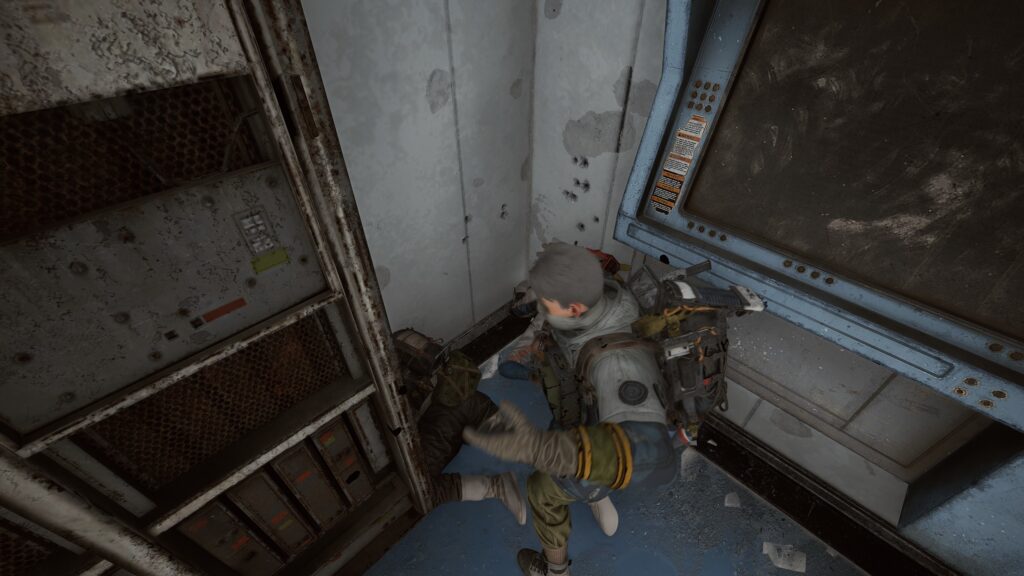
The Priming Action (the EMP blast) disables enemy counter-measures and immobilizes robotic units, creating a perfect window for the Detonating Action (the Homing Mine), which can now track and destroy its target with a 100% success rate. The squad’s objective is to build their loadouts around these synergistic pairs, ensuring that for every tactical problem, they have a prepared one-two punch solution. This proactive approach to engagement is the hallmark of a high-functioning team.
Architecting a Squad Loadout: Role-Based Synergy
Synergy extends beyond a single operator to the entire squad. A perfectly crafted team loadout assigns complementary roles, ensuring all tactical bases are covered without redundant overlap. This is the concept of Asymmetrical Loadout Design, where each member specializes in a different phase of the engagement.

- The Initiator: This operator specializes in breaching and disruption. Their loadout (e.g., Flashbangs, Breaching Charges) is designed to create chaos and break enemy formations, setting the stage for the rest of the squad.
- The Controller: This role focuses on area denial and battlefield manipulation. Their gadgets (e.g., Cryo Mines, Smoke Grenades, Deployable Cover) are used to lock down sightlines, funnel enemies into kill zones, and protect the squad’s flanks.
- The Eliminator: The designated damage-dealer. Their gadgets (e.g., Frag Grenades, Laser Trip Mines) are less about utility and more about capitalizing on the opportunities created by the Initiator and Controller to neutralize threats efficiently.
- The Support: This operator carries gadgets that enhance squad survivability and information gathering (e.g., Medical Kits, Recon Drones, Ammo Packs). They are the force multiplier, ensuring the other roles can perform their functions at peak efficiency.
A squad where everyone brings Frag Grenades is a squad destined for failure. A squad built on these complementary roles can adapt to any tactical situation with practiced, lethal efficiency.
Combinatorial Effect Chart: Common Synergistic Pairings
To better visualize these interactions, we can map out common gadget pairings and their resulting combinatorial effects. This chart serves as a foundational guide for operators looking to optimize their tactical contributions to the team.
| Primer Gadget (Initiator/Controller) | Detonator Gadget (Eliminator) | Synergistic Outcome | Tactical Application |
|---|---|---|---|
| Smoke Grenade | Thermal Scope (Weapon Mod) | One-Way Obscurement | Allows squad to engage enemies through smoke while remaining completely unseen. Ideal for breaching heavily defended rooms. |
| Concussion Mine | Incendiary Grenade | Immobilize and Burn | Disorients and slows a group of enemies, preventing them from escaping the area-of-effect of the follow-up incendiary. |
| Recon Drone (Tagging) | Wall-Penetrating Sniper | Target Acquisition and Neutralization | Provides real-time enemy positions through cover, allowing the sniper to eliminate high-value targets before engagement begins. |
Environmental Synergy: Using the Battlefield as a Weapon
The highest level of gadget synergy involves the environment itself. This is the practice of Environmental Exploitation, where squad equipment is used to turn neutral terrain into a deadly trap. A simple puddle of oil on the floor is a minor inconvenience until a Controller operator uses a Shock Grenade to electrify it, creating a wide area-denial zone. A destructible wall is just cover until an Initiator uses a Breaching Charge to create a new, unexpected firing line for the Eliminator.

Elite squads read the environment not for what it is, but for what it *could be* with the application of the right gadget. They see every explosive barrel, every weak structure, and every conductive surface as an extension of their loadout.
Counter-Synergy: The Logic of Disruption
Just as a squad can build synergistic loadouts, they must also understand Counter-Synergy—the art of disrupting an enemy squad’s tactical machine. This requires predictive analysis of the enemy’s likely strategy. If an enemy team is reliant on Recon Drones for information (a common synergy with snipers), an operator with a Signal Jammer can cripple their entire intelligence-gathering operation. If an enemy Controller is locking down an area with deployable turrets, an EMP grenade serves as a hard counter. This meta-game of building to counter the enemy’s expected synergies is a critical component of high-level competitive play.
Conclusion: The Loadout as a System
Ultimately, operators must cease to view their gadgets as discrete, independent tools. The modern battlefield demands a systemic approach.
A successful loadout is a coherent, interconnected system designed for a specific purpose, and a successful squad is a larger system composed of these individual loadouts working in concert. The mastery of gadget synergy—from simple primer/detonator pairs to complex squad-wide asymmetrical design—is the true engine of tactical supremacy, allowing a coordinated team to consistently outperform and overwhelm opponents of equal or even greater individual skill.