In the arsenal of the Resistance, high-explosive ordnance and advanced plasma weaponry often steal the spotlight. Yet, these tools only dictate the terms of a fight once it has begun. The true master of the battlefield is the operator who dictates the terms of engagement itself, and their primary instrument is not a weapon, but a tool of movement: the Physics-Based Grappling Hook. Often dismissed by novices as a simple traversal gimmick, the grappling hook is, in reality, a complex tactical device whose mastery unlocks a third dimension of combat, offering unparalleled flanking routes, escape vectors, and positional dominance.
This deep dive will analyze the nuanced mechanics of momentum conservation, pendulum physics, and anchor-point selection that separate a clumsy ascent from a fluid, combat-defining aerial maneuver. We will establish why grappling hook proficiency is the single greatest force multiplier for an individual operator.
Beyond Point-to-Point: The Principle of Momentum Conservation
The fundamental error in grappling hook usage is treating it as a “point-and-click” teleportation device. This linear thinking negates its primary strength. The hook operates on a principle of Momentum Conservation and Redirection. An operator’s existing momentum—from sprinting, jumping, or falling—is not nullified upon attachment; it is converted into angular velocity, creating the basis for a swing. A static, standing grapple results in a slow, predictable, vertical ascent, making the operator an easy target.
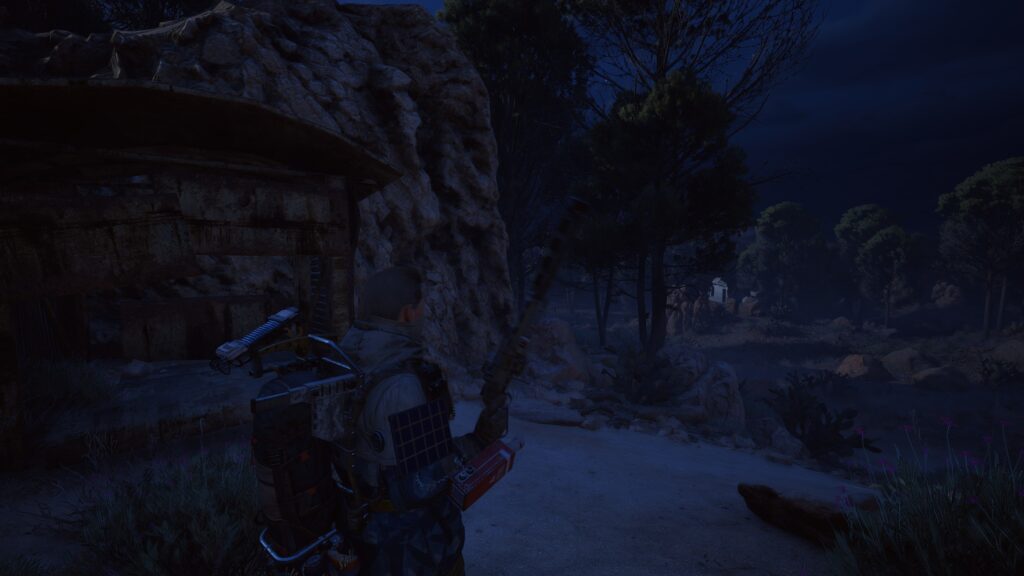
Conversely, a running, jumping grapple initiates a powerful pendulum swing. By understanding this, an operator can use the hook not just to move *up*, but to move *around*. This allows for maneuvers such as swinging around a building’s corner to flank an entrenched enemy, or using a high anchor point to launch oneself over an obstacle, completely bypassing a defended chokepoint. The hook is not a ladder; it is an engine for converting horizontal momentum into tactical repositioning.
The Art of the Swing: Pendulum Mechanics and Release Timing
Once a swing is initiated, the operator has direct control over their trajectory through two key mechanics: line tension and release timing. Mastering the Pendulum Arc is critical for advanced mobility.
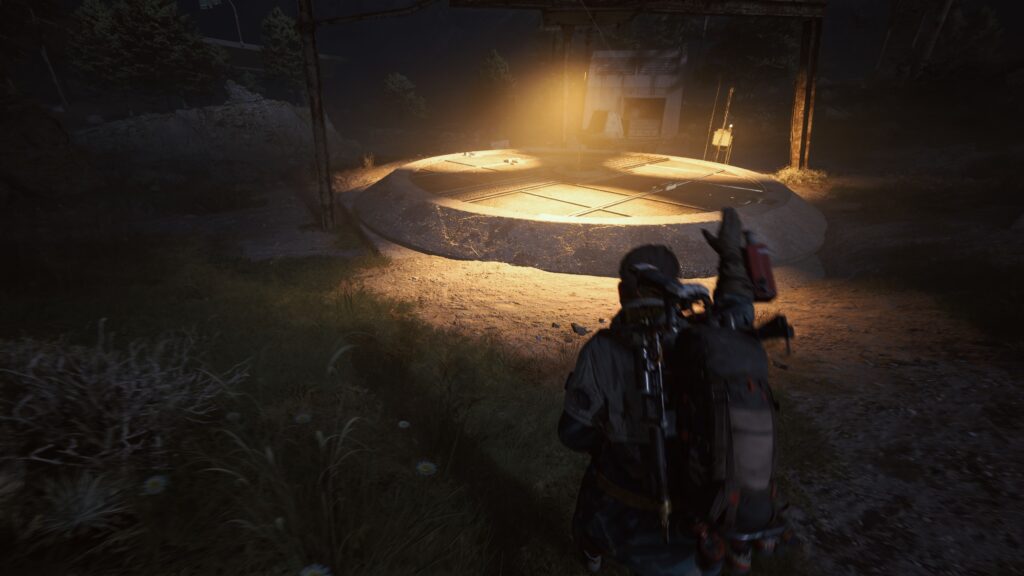
- Line Retraction: Shortening the grapple line mid-swing tightens the arc and increases velocity. This is used for rapid acceleration or for clearing obstacles close to the anchor point. It’s a high-G maneuver that trades broad movement for speed.
- Line Extension: Lengthening the line broadens the arc, creating a slower but wider swing. This is ideal for covering maximum horizontal distance or for carefully positioning a landing.
- Release Point Dynamics: The moment of release is paramount. Releasing at the bottom of the arc (maximum velocity) launches the operator forward horizontally. Releasing at the peak of the upswing converts momentum into vertical height, allowing access to ledges far above the anchor point. A late release can even be used to perform a “retro-swing,” flinging the operator backward.
The elite operator intuitively understands these physics, chaining swings together by selecting new anchor points mid-air, never touching the ground and maintaining a state of constant, unpredictable motion.
Grapple-Based Combat Maneuvers
When integrated with combat, the grappling hook transforms from a traversal tool into a potent offensive and defensive system. These maneuvers create opportunities that are impossible for a ground-based soldier.
| Maneuver Name | Execution | Tactical Advantage |
|---|---|---|
| The Death From Above | Grapple to a point high above an enemy, release at the peak, and initiate a ground-slam or fire explosives downward. | Attacks from an undefended vertical axis, often bypassing enemy cover entirely. High potential for AoE damage. |
| The Drive-By Swing | Initiate a wide, horizontal swing past an enemy position while firing. | Makes the operator an extremely difficult target to track while providing a brief, powerful flanking angle. |
| The Emergency Egress | When shields break, immediately grapple to a high or distant point to break line of sight. | The fastest escape option available, allowing for rapid repositioning to recharge shields and re-engage from a new angle. |
Anchor Point Selection: Reading the Environment
An operator’s mobility is limited only by their ability to identify viable anchor points. This requires a skill called Environmental Parsing—the ability to instantly scan the surroundings and map out potential grapple pathways. An expert doesn’t just see buildings; they see a sequence of ledges, flagpoles, and window frames that form a high-speed aerial highway. They understand that a low anchor point is for generating forward speed, a high anchor point is for gaining height, and an off-angle anchor point is for flanking.
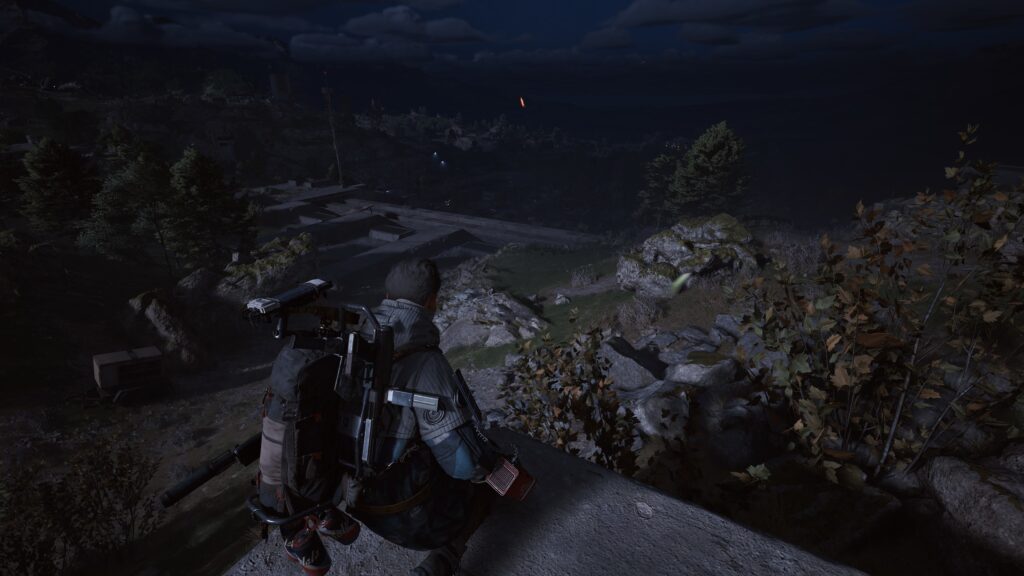
Furthermore, they assess the structural integrity of potential anchors. Grappling to a flimsy light post might not support a high-tension swing, while a reinforced concrete beam is a reliable anchor for any maneuver. This constant, subconscious analysis of the environment is what separates a true grappling hook master from a novice.
Noise Discipline and Tactical Trade-offs
For all its advantages, the grappling hook is not without its tactical cost: noise. The firing and retraction mechanism generates a distinct audio cue that can alert enemies to the operator’s position and approach vector. Therefore, its use in a stealth situation is a significant trade-off. The decision to grapple becomes a calculated risk: is the superior position gained by a grapple worth sacrificing the element of surprise? In a full-scale firefight, this is irrelevant. But during infiltration, a poorly timed grapple can compromise the entire mission. The true master knows not only how to grapple, but *when*.
Conclusion: The Apex Predator’s Tool
The physics-based grappling hook is the single most skill-expressive tool in the Resistance’s arsenal. It redefines the very geometry of the battlefield, transforming flat, two-dimensional encounters into complex, three-dimensional aerial ballets of death.
By mastering the intricate interplay of momentum, pendulum physics, and release timing, an operator can achieve a state of hyper-mobility that makes them a phantom on the battlefield—always flanking, always in an advantageous position, and always just out of reach. The grappling hook is not for getting from point A to point B; it is for ensuring that wherever the operator is, is the place the enemy wishes they weren’t.